 Bitácora de cine centroamericano. Tomo I: Honduras (1942-2022)
 Subtotal: 27.55€

43.00€
AVISO: Para compras desde EE.UU y América Latina, el pedido se realiza a través de Iberoamericana Vervuert, en el siguiente enlace:
https://www.iberoamericana-vervuert.es/BuscaTotal.aspx?C1=El%20cartel%20protesta
La obra es un primer acercamiento a un movimiento artístico que se ha desarrollado notablemente desde finales de la década de 2010
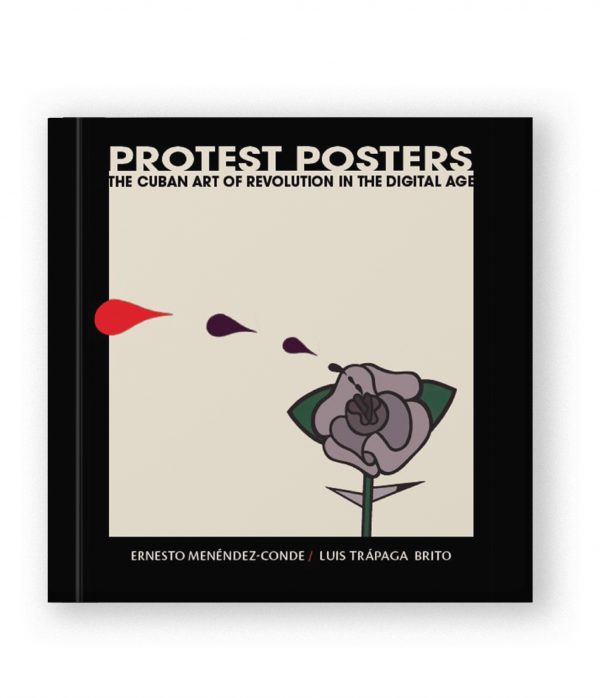
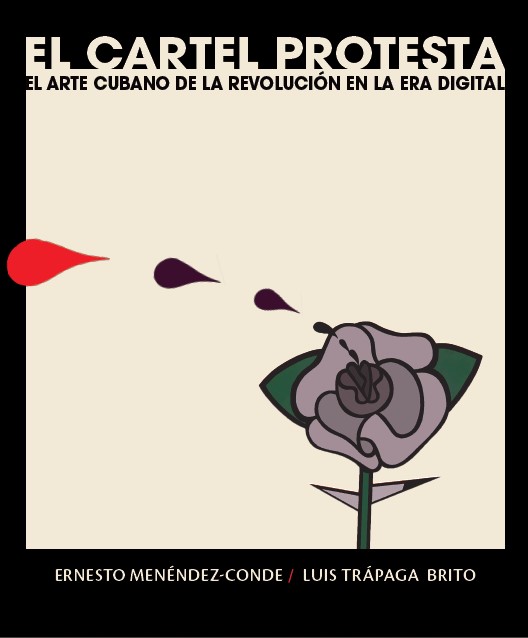
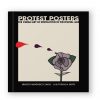
Ediciones Hurón Azul publishes Protest Posters: The Cuban Art of the Revolution in the Digital Age, a study of antipropaganda graphic art in Cuba. The book is a first approach to an artistic movement that has developed significantly since the late 2010s.
Protest posters emerged because of the absence of a public space. The artist Luis Trápaga Brito opened an unauthorized project, a house gallery he called El Círculo, which he ran together with activist Lía Villares. Cultural authorities and the country’s intelligence services began exerting strong pressure to prevent any artistic event from taking place in the gallery due to the socially critical content of the works exhibited there.
Due to the difficulties of exhibiting the artworks, Trápaga and the art critic Ernesto Menéndez-Conde, based in New York, conceived the idea of producing a book on this antipropaganda art —often created from within Cuba— which has been published mostly on social media and remains censored in the country.
Protest Posters brings together more than three hundred works by around thirty artists. The images express a growing discontent with a government that has remained in power for more than six decades and has been reluctant to undertake changes. The book is a response to the international projection of an efficient political propaganda apparatus implemented by a regime that continues to describe itself as “revolutionary” and to present itself as the herald of the most humanitarian and progressive social causes on the planet. It is also a reaction to the indoctrination to which the Cuban people have been subjected for more than half a century.
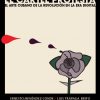
The title alludes to the book The Art of Revolution (1971), which included an introductory text by Susan Sontag and was dedicated to the graphic design that emerged in Cuba during the 1960s. The title also contains references to the well-known poster Canción protesta (1967), created by the Cuban graphic designer Alfredo Rostgaard. The continuities between the graphic design published by government institutions during the first decades of the Revolution and the oppositional posters of the digital era are striking.
Los autores
Ernesto Menéndez-Conde (Villa Clara, 1966) is a Cuban researcher and art critic based in New York. He graduated from the Academia de Bellas Artes de San Alejandro (1985) and earned a degree in Art History from the University of Havana (1994). He holds a PhD in Romance Studies from Duke University. He is the author of Trazos en los márgenes. Arte abstracto e ideologías estéticas en Cuba (2019) and was the founder and editor-in-chief of the bilingual magazine Art experience: NYC (2011–2014). He has contributed to journals in Spain, Cuba, and the United States.
Luis Trápaga Brito (Havana, 1962) is a Cuban artist who graduated from the Academia de Bellas Artes de San Alejandro (1986). He has exhibited in Havana, Prague, Barcelona, and Miami, and has also participated in group exhibitions in Havana, Spain, the Czech Republic, and the United States. In 2012 he inaugurated the independent space Estudio-Galería El Círculo.
La obra en los medios
El libro ha sido reseñado en Árbol invertido: https://www.arbolinvertido.com/cultura/el-cartel-protesta-entrevista-al-critico-de-arte-cubano-ernesto-menendez-conde ; y: https://www.arbolinvertido.com/cultura/luis-trapaga-de-las-artes-plasticas-la-curaduria-de-carteles-contestatarios-en-cuba ; y: https://www.youtube.com/watch?v=920lyMn1mIo ; y en Mega TV, programa Al borde del abismo: https://www.youtube.com/watch?v=Xw2CWsUY54w&t=44s
Videos promocionales
https://www.youtube.com/watch?v=XC-4MIyJv5Q ; https://www.youtube.com/shorts/iOQYoZDZfIk ; https://www.youtube.com/watch?v=sWHTl_ZXAXE
ISBN: 979-13-990924-62
PVP: 45 euros
Páginas: 460
Dimensiones: 220 x 266
| Peso | 1.8 kg |
|---|---|
| Dimensiones | 220 × 3 × 266 cm |
Sé el primero en valorar “PROTEST POSTERS. THE CUBAN ART OF THE REVOLUTION IN THE DIGITAL AGE”
Productos relacionados
-5% Web
31.82€
-5% Web

23Y12
28.00€

5.00€
-5% Web
23.75€
-5% Web
15.00€
-5% Web
22.80€
-5% Web

Valoraciones
No hay valoraciones aún.